July 21, 2026
Stop Adjusting Your CO2. Summer Draft Beer Foam Starts in the Lines.
Summer foam problems are not a CO2 issue. They trace back to line temperature and beer line cleaning solution. Here is why.
Stop Adjusting Your CO2. Summer Draft Beer Foam Starts in the Lines.
Every summer, bar owners across the country turn the same knob in response to the same problem. The foam does not go away. The beer quality gets worse. And the lines never get looked at.
Foam is the most misdiagnosed problem in draft beer service. When it shows up in summer, the instinct is to reach for the CO2 regulator. Most of the time that is the wrong move. The real answer is almost always a beer line cleaning solutionapplied properly and on the right schedule, combined with a refrigeration system that is actually keeping pace with summer demand. Adjusting gas pressure to compensate for a line or temperature problem does not fix the foam. It masks one symptom while creating others.
If your taps are foamier in July than they were in April and you have not changed anything, something in your system changed for you. Here is what is actually happening and how to fix it correctly.
Why Summer Makes Foam Worse on Draft Beer Systems
Beer foam is a physics problem before it is anything else. CO2 dissolved in beer stays dissolved as long as the beer stays cold and the pressure stays balanced. When either of those conditions changes, the gas escapes and you get foam instead of beer in the glass. Summer puts pressure on both of those conditions simultaneously.
Higher ambient temperatures push heat into every part of the system. Walk-in coolers work harder to maintain temperature and sometimes fall short during peak service hours. Glycol chillers lose efficiency as the mechanical spaces they sit in warm up. Trunk lines that pass through unconditioned areas absorb heat from the environment around them. The result is beer that arrives at the faucet warmer than it left the keg, and warmer beer foams.
At the same time, higher draw volume in summer means more beer is moving through lines that may not have been cleaned on the schedule the volume demands. Organic buildup on line walls does not just affect flavor. It creates surface irregularities that act as nucleation points, places where dissolved CO2 grabs onto a surface and escapes the liquid. A line with protein and yeast buildup will produce more foam than a clean line at the same temperature and pressure, and in summer you are dealing with both problems at once.
What the Right Beer Line Cleaning Solution Actually Fixes
A properly selected and applied beer line cleaning solution removes the organic deposits that accumulate between cleaning cycles. Proteins, yeast, hop resins, and biological film all build up on the interior walls of beer lines and faucet components with every keg that moves through the system. Each layer adds to the nucleation surface that generates foam and introduces off-flavors into every pour.
The word "properly" carries a lot of weight in that sentence. A cleaning solution that is diluted below the manufacturer's recommended concentration does not fully break down what is on the line walls. One that does not sit for adequate contact time starts the chemical reaction without completing it. Both situations produce lines that appear to have been cleaned and are not actually clean. In summer, when draw volume is higher and biological growth is faster, a cleaning protocol that was marginal in cooler months becomes visibly inadequate.
Caustic Solution for Organic Buildup
The standard alkaline or caustic cleaning solution handles yeast, protein, and biological film. It works by raising the pH inside the line to a level that breaks down organic material chemically. The solution needs to be mixed at the correct dilution ratio and allowed to soak for the full recommended contact time, typically 15 to 30 minutes depending on the product. Recirculating the solution through a pump system improves contact with line walls and produces a more thorough clean than a static soak, especially in longer line runs.
Acid Solution for Beer Stone
Caustic cleaning alone does not address beer stone, the mineral scale that forms on line walls from calcium oxalate deposits. An acid-based cleaning solution is required for that, and it should be cycled into the rotation every four to six weeks alongside the standard caustic clean. Operations that run caustic only, never rotating in an acid clean, accumulate beer stone gradually until it becomes a significant contributor to foam and flavor problems. Summer is often when that accumulation reaches a visible threshold because higher volume is moving through lines that have been under-maintained for months.
Beer Line Cleaning Keg Systems
A beer line cleaning keg is a recirculating pump system that pushes cleaning solution through lines continuously rather than relying on a gravity or pressure flush. For operations with multiple taps or long-draw configurations, a cleaning keg system provides more consistent chemical contact across the full line length than manual methods. The recirculation keeps fresh solution moving against line walls throughout the soak period, improving removal of stubborn buildup. If your current cleaning method is a hand pump and a bucket, upgrading to a recirculating keg system will produce a meaningfully better clean, particularly in summer when the standard of cleanliness needs to be higher to keep pace with biological growth rates.
How to Tell Whether Your Foam Is a Cleaning Problem or a Temperature Problem
Both problems produce foam, and both problems are often present at the same time in summer. Separating them helps you address the right thing first and avoid the cycle of adjusting one variable endlessly without fixing the actual cause.
Foam that appears consistently from the first pour of a fresh keg points more toward temperature or pressure. Beer that starts a keg cleanly and develops increasing foam as the keg progresses points more toward line contamination, as the beer is picking up nucleation points from the buildup as it moves through the lines. Foam that appears on some taps but not others on the same gas zone suggests a line-specific issue on the affected taps rather than a system-wide pressure or temperature problem.
Before adjusting CO2 pressure in response to foam, ask when the lines were last cleaned and whether the cleaning was done at full concentration with full contact time. The answer will usually point you toward the real fix.
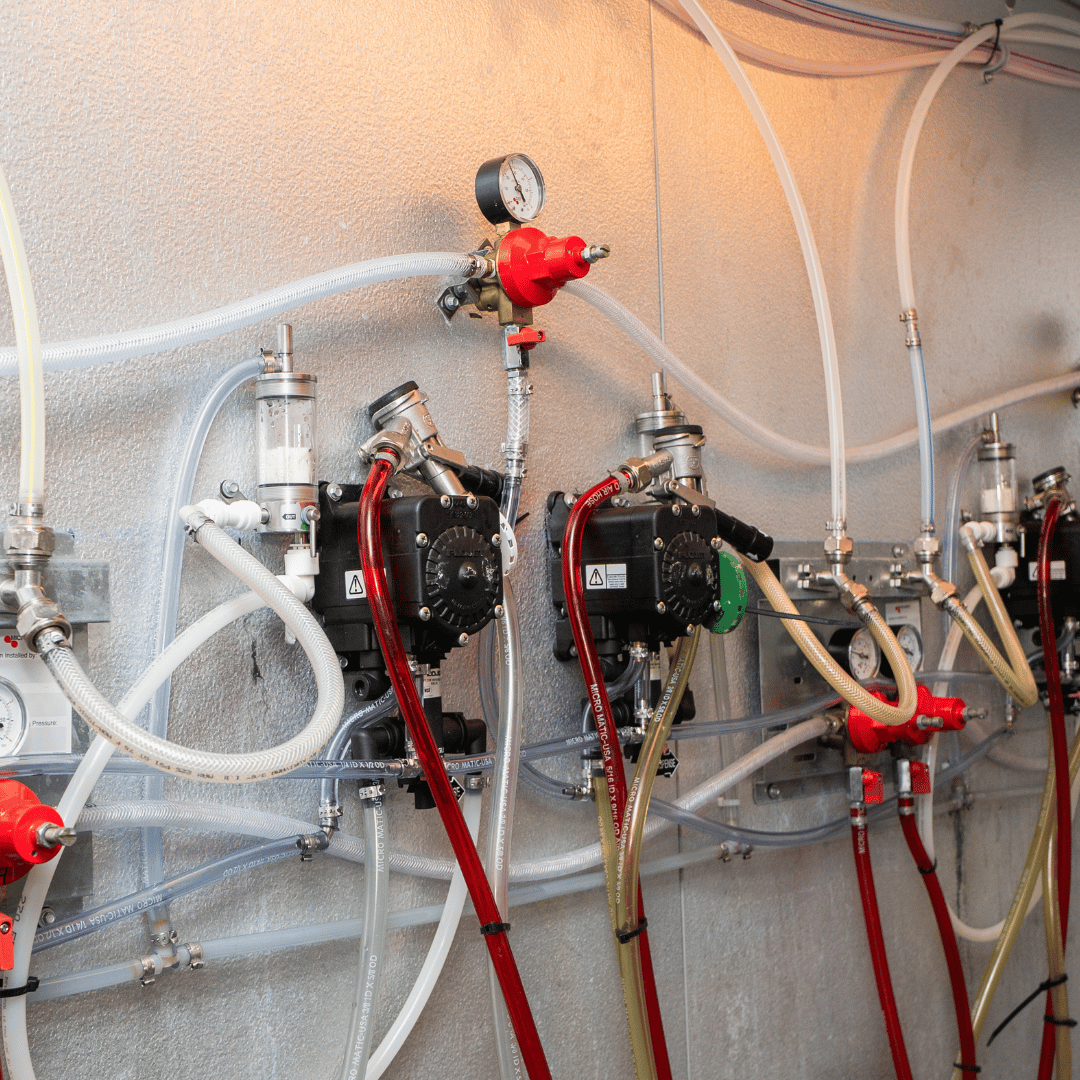
If foam persists after a thorough line cleaning with proper solution, the issue has shifted to the cold side. A glycol chiller that is not maintaining trunk line temperature during peak service hours, a walk-in cooler struggling with summer ambient heat, or a condenser that needs cleaning are all refrigeration issues that produce foam no cleaning solution will resolve. Those require a refrigeration service visit rather than another cleaning cycle.
Cleaning Frequency in Summer Is Not the Same as the Rest of the Year
The two-week cleaning interval that works adequately in fall and winter is a minimum, not a ceiling. In summer, high-volume taps may need attention every week. Higher ambient temperatures accelerate biological growth inside lines between cleanings. More kegs moving through the system in the same period means more organic material cycling through the lines. Both factors compress the effective window of a standard cleaning cycle.
The Brewers Association Draft Beer Quality Manual is explicit that cleaning frequency should be evaluated against draw volume, not just a fixed calendar schedule. A tap that moves five kegs a week in July is not on the same maintenance timeline as one that moves two kegs a week in November. Applying the same interval to both situations means the high-volume summer tap is perpetually under-maintained relative to what it actually needs.
Operators who shift to a weekly cleaning schedule on their busiest summer taps consistently report better foam control and more consistent pour quality through the peak season. The cost of the additional cleaning cycles is easily offset by the reduction in wasted product from foamy pours and the customer experience that comes with a consistently well-poured beer. A professional line cleaning programon a schedule calibrated to your summer volume takes that decision out of the staffing equation entirely.
What Happens When You Keep Adjusting Gas Instead of Cleaning the Lines
Turning up CO2 pressure to push through foam caused by line contamination or temperature variance does not fix either problem. It moves more carbonation into beer that is already struggling to hold the carbonation it has, and it accelerates the rate at which gas escapes when the beer hits a warm or dirty section of line. The foam gets pushed further down the pour but does not go away, and the beer reaching the glass is now over-carbonated relative to what the style calls for.
Over time, repeated upward pressure adjustments to compensate for an unresolved line issue leave the system running well above its balanced pressure point. When the line problem is eventually addressed, the now-elevated pressure creates a new foam problem in the other direction. Getting back to a properly balanced system after months of compensation adjustments takes time and often requires a full reset of the gas side alongside the line cleaning. Addressing the line problem correctly the first time avoids that entire cycle.
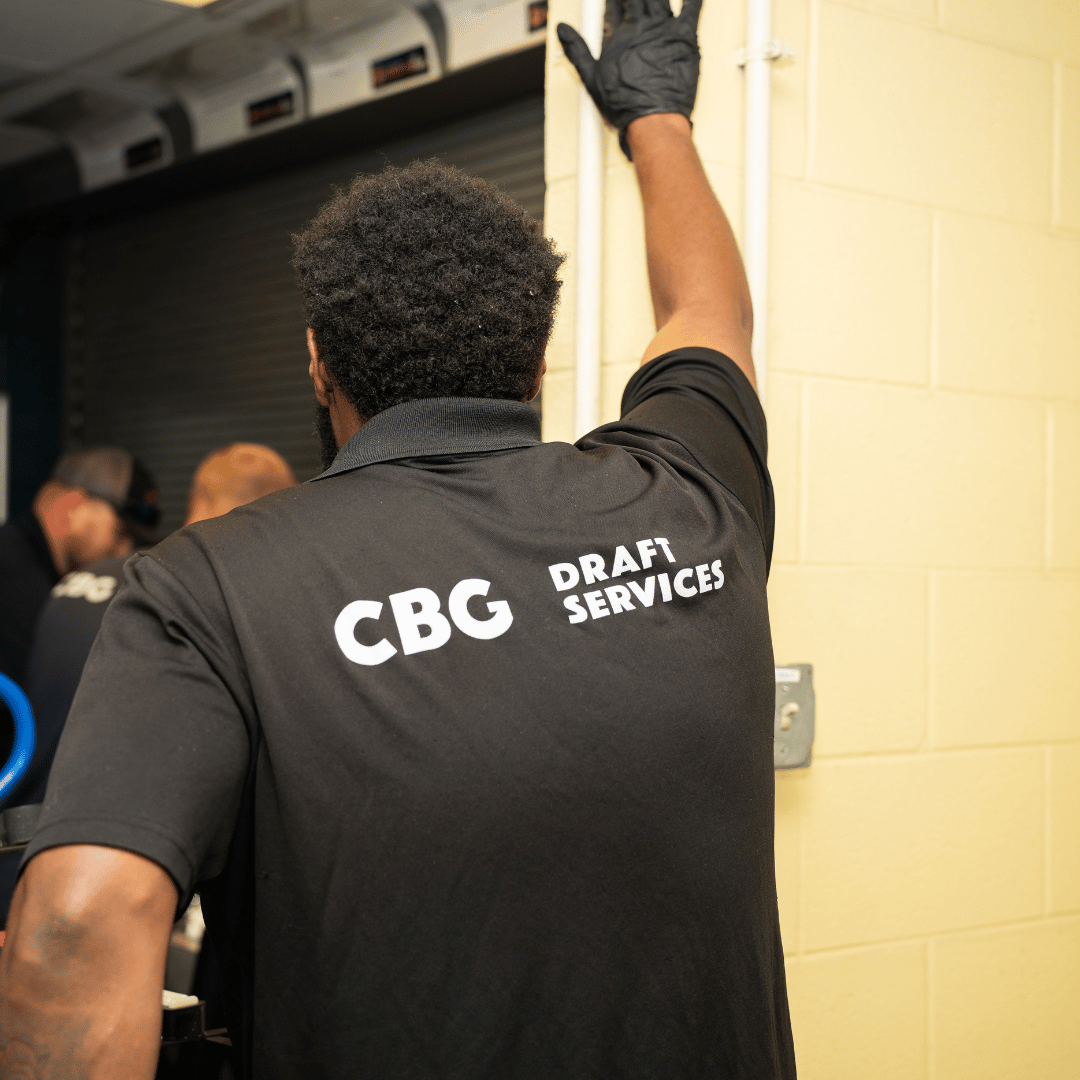
If summer foam has your taps underperforming, CBG Draft Servicesprovides professional beer line cleaning using the right solution at the right concentration, on a schedule built around your actual draw volume. We also handle glycol and refrigeration service when the cold side is contributing to the problem. One call covers both sides of the diagnosis.
Schedule a Line Cleaning or System Check
Or call us at (704) 727-3300 — Mon–Fri, 8am–4:30pm EST