May 19, 2026

Draft Beer Examples and What They Demand from Your System
Not all draft beer pours the same way. Learn which draft beer examples belong in your tap program and what each one needs.
Not All Draft Beer Pours the Same: Draft Beer Examples and What They Demand from Your System
Most operators pick their taps based on what sells. Far fewer think about what those taps actually require from the system behind them, until something goes wrong.
Every style of draft beer has its own pressure requirements, gas blend, serving temperature, and line configuration. The draft beer examples you put on your menu aren't just a beverage decision — they're a technical one. A tap program built without accounting for these differences will underperform no matter how good the kegs are. Understanding what each style demands is the foundation of a draft system that actually works.
Whether you're opening a new bar, expanding your tap count, or rethinking a program that hasn't been performing, here's what you need to know before you commit to a line count, a gas setup, or an installation.
Draft Beer Examples: The Styles That Define Most Tap Programs
Walk into almost any bar and you'll find a version of the same core lineup, even if the specific brands differ. Domestic lagers, craft IPAs, a stout or porter, maybe a wheat beer, a cider, and increasingly a hard seltzer or two. Each of those categories has distinct serving requirements, and grouping them all under "draft beer" without accounting for those differences is where most tap program problems begin.
Lagers and Pilsners
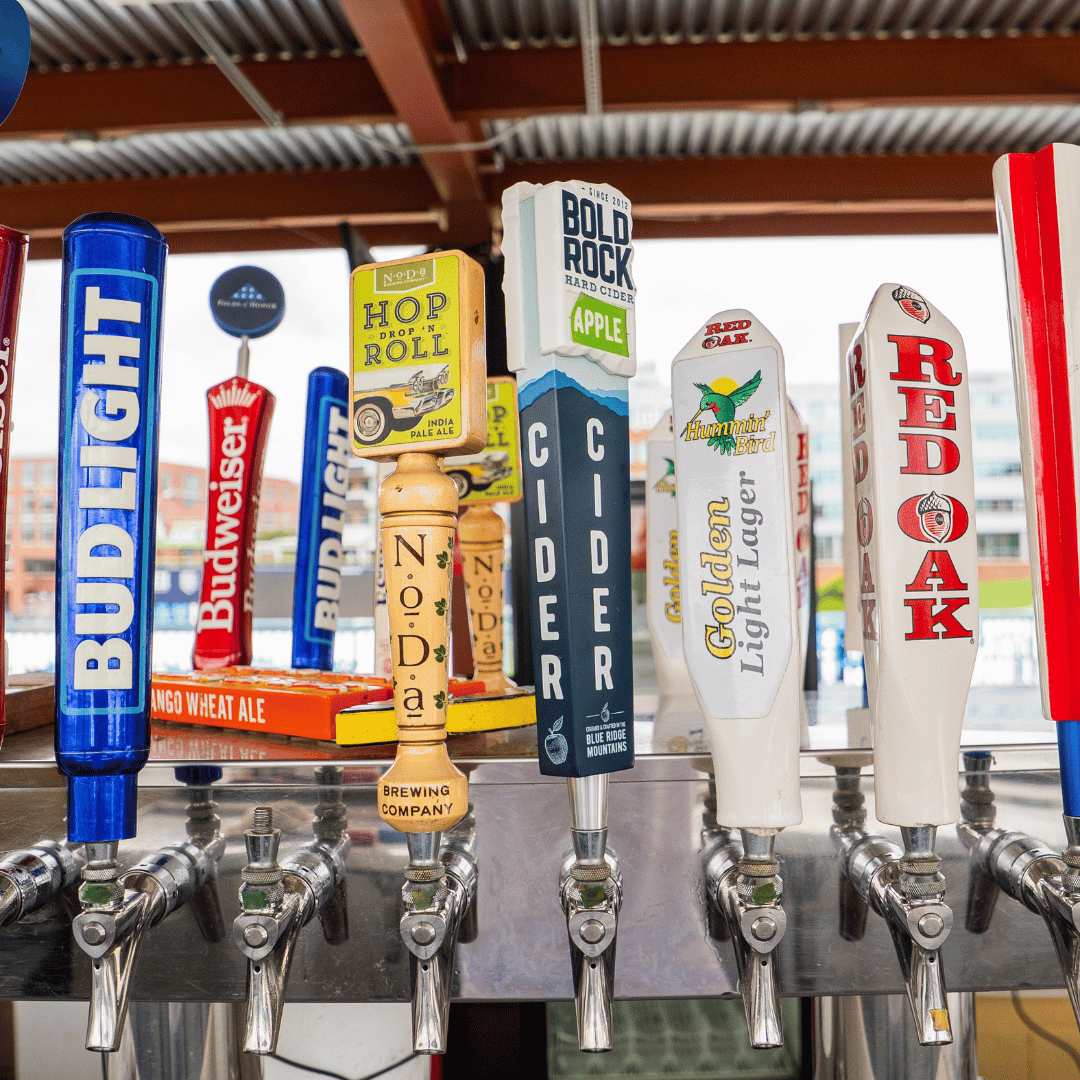
The workhorse of most commercial tap programs, lagers are high-volume, lower-margin, and extremely sensitive to temperature. Domestic lagers like Budweiser, Coors, and Miller are typically served between 34 and 38 degrees Fahrenheit at 10 to 12 PSI of CO2. Small deviations in serving temperature show up immediately as excess foam. A properly calibrated walk-in cooler and glycol system are non-negotiable for this category, especially in high-volume accounts where the keg turns over quickly.
Ales and IPAs
Craft ales and IPAs have become the profit driver on most independent bar tap programs. Styles like pale ales, session IPAs, hazy NEIPAs, and ambers typically pour well between 36 and 40 degrees at 10 to 14 PSI. The variation within this category is wide — a highly carbonated West Coast IPA and a softer hazy pour have meaningfully different pressure needs. Running both off the same regulator without adjustment is a setup for at least one of them pouring poorly.
Stouts and Nitro Beers
Nitro stouts, led by Guinness but now represented by dozens of craft options, are the most technically demanding draft beer example on this list. They require a mixed gas blend, typically 75% nitrogen and 25% CO2, served at lower PSI than CO2 systems, usually between 30 and 40 PSI total. Nitrogen is far less soluble in liquid than CO2, which is exactly what gives nitro beers their dense, creamy head and smooth mouthfeel. Pouring a nitro beer on a standard CO2 line produces a flat, under-conditioned product that misrepresents the style entirely.
Wheat Beers and Belgians
Hefeweizens, witbiers, and Belgian-style ales are naturally higher in carbonation and often served slightly warmer than lagers, typically around 40 to 45 degrees. The elevated CO2 content in many of these styles means they're more sensitive to line temperature fluctuations. A trunk line that runs a degree or two warm during a busy service period will turn a well-balanced hefeweizen into a glass of foam faster than almost any other style on tap.
Ciders, Seltzers, and Non-Beer Taps
Hard ciders and hard seltzers have become standard tap program inclusions for most full-service bars. Both categories are highly carbonated — often more so than beer — and require higher CO2 pressure, sometimes up to 20 PSI or above depending on the product. Putting a high-carbonation cider on the same regulator as a moderate-carbonation lager without a dedicated secondary regulator will either over-carbonate the lager or under-serve the cider. Mixed tap programs with wide carbonation ranges need a draft system designed for that variability from the start.
What Draft Beer Style Differences Mean for Your System
The reason draft beer examples matter from a systems perspective is that each one creates different demands on the same infrastructure. Pressure, temperature, gas blend, line length, and faucet type all interact differently depending on what's flowing through them. A system optimized for one style may actively work against another.
The Brewers Association Draft Beer Quality Manual is the industry's most referenced resource on this, covering carbonation volumes, serving temperatures, and pressure calculations by style. It's worth reading before you spec a system or evaluate an existing one.
The most common draft system design mistake is building for the most popular tap, then trying to make every other style work around it. Different styles need dedicated configurations, not workarounds.
Mixed gas systems add another layer. If your tap program includes both standard CO2 beers and nitro options, you need separate gas lines, separate regulators, and ideally separate trunk lines to keep the systems from interfering with each other. A bar that installs a nitro tap without planning for the gas infrastructure often ends up with a faucet that looks good on the menu and pours badly every service.
Building a Draft Beer System Around Your Tap Program
The sequence matters here. Too many operators choose their tap count and style mix, then look for a draft beer system that fits around it. The better approach is the reverse — let the styles you want to serve inform the system design before any hardware goes in. That means accounting for the number of CO2 zones you need, whether you need mixed gas capability, how far the lines run from the cooler to the faucet, and what temperature consistency you need across all taps.
Long-draw systems, common in bars where the keg room is far from the tap wall, require glycol-cooled trunk lines to maintain consistent temperature across the full run. Short-draw systems in smaller operations have more flexibility, but are still susceptible to temperature problems if the cooler isn't properly sized for the draw volume. Neither setup is forgiving of design shortcuts.
For operations adding taps to an existing system, the question is whether the current infrastructure can support the new style. Adding a nitro tap to a CO2-only setup isn't a matter of swapping a faucet. It requires a gas source, a blender or pre-mix cylinder, a dedicated regulator, and line configuration that keeps the nitrogen blend from affecting adjacent CO2 taps. Doing it right means having someone assess the existing system before deciding what's possible.
What to Look for in Draught Beer Installation Companies
When you're evaluating draught beer installation companies, the first question isn't about price. It's about whether the company understands the full range of what you're trying to pour. An installer who only works with standard CO2 systems isn't equipped to build a program that includes nitro, high-carbonation ciders, or long-draw configurations. The scope of their experience should match the complexity of your tap program.
Ask specifically about system design before installation. A good installer isn't just running lines — they're configuring gas zones, sizing refrigeration to draw volume, planning trunk line routing, and thinking about how the system will perform across all the styles you're planning to serve. If the conversation jumps straight to hardware costs without addressing those questions, that's worth noting.
Service capability after installation matters just as much as the install itself. A company that installs your system and then isn't available for ongoing maintenance and repair leaves you dependent on whoever you can find when something goes wrong. The best draught beer installation companies build long-term relationships with their accounts — they know your system, they know your tap program, and they're the first call when anything changes. See the full range of what CBG Draft Services offers on the installation side if you're planning a new build or an expansion.
The Master Brewers Association of the Americas also maintains technical resources on draft system design standards that are useful benchmarks when evaluating any installer's proposed approach.