June 1, 2026
Summer Is Peak Season. Is Your Draft Beer Refrigeration Ready for It?
Summer is peak season for draft beer sales and peak failure season for refrigeration.
Summer Is Peak Season. Is Your Draft Beer Refrigeration Ready for It?
Summer does not just bring more customers. It brings higher ambient temperatures, longer service windows, faster keg turnover, and a refrigeration system working harder than it has all year. Most failures happen right when you can least afford them.
Bar and restaurant operators know summer as their busiest stretch. What a lot of them do not account for is that draft beer refrigeration takes more strain between June and September than in any other period. Draw volume spikes. Outdoor temperatures push ambient heat into mechanical spaces. Doors open more. Condensers run longer cycles. Every component in your cold-side system is doing more work, and if any of it is already running at reduced efficiency, summer is when it breaks.
Getting ahead of that before the season starts is not just smart maintenance. For a high-volume operation, it is the difference between a profitable summer and one spent managing equipment failures during your busiest shifts.
What Summer Actually Does to Draft Beer Refrigeration
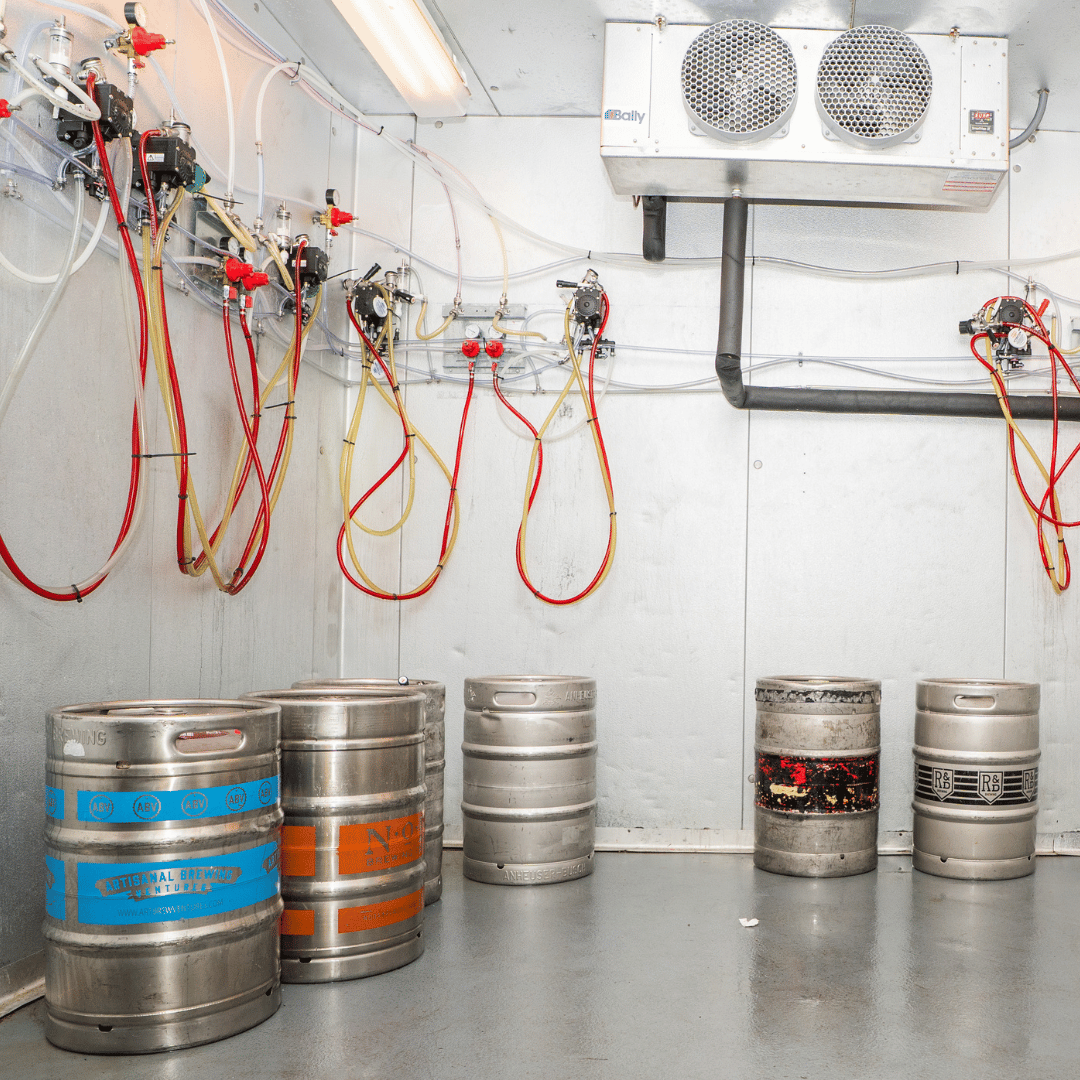
Refrigeration equipment is rated to operate within a range of ambient temperatures. When the air around a condenser unit heats up, the system has to work harder to achieve the same outcome. A walk-in cooler that maintains 36 degrees without much effort in February may struggle to hold that same temperature in July when the mechanical room it sits in is pushing 90 degrees.
The stress compounds quickly. Higher ambient temperature increases compressor run time. Longer run cycles generate more heat. More heat means the system has to work even harder to compensate. Equipment that was borderline before summer often crosses into failure territory once the season is fully underway. A condenser coil that is 30% blocked with grease and debris in April becomes a liability by July.
Higher customer volume adds a separate layer of stress. More kegs are tapped and kicked in the same period. Walk-in doors open and close more frequently. Each door opening introduces warm, humid air that the system has to drive back out. On a busy Friday night in August, your cooler is fighting both the heat outside and the traffic inside, and it needs to be in good shape to win that fight.
The Components Most Stressed by Summer Heat and Volume
Walk-In Cooler Condensers
The condenser is the part of your refrigeration system that releases heat to the outside environment. When ambient temperatures rise, the condenser has to work harder to do that job. A coil that has not been cleaned since the fall is starting the summer already impaired. Grease, dust, and debris act as insulation on the coil fins, trapping heat and forcing longer run cycles. Condenser cleaning before summer is one of the highest-return maintenance tasks an operator can schedule, and one of the most commonly skipped.
Glycol Chillers
Glycol systems maintain trunk line temperature between the cooler and the faucet, and they are especially vulnerable to summer conditions when the chiller unit is located in a warm mechanical space or outdoors. A glycol chiller that is already running warm will lose its ability to maintain trunk line temperature during high-draw service periods. When that happens, beer warms in the lines and foam becomes a persistent problem that no gas adjustment will fix. If your glycol chiller has not had a fluid check, a pump inspection, and a condenser cleaning recently, summer is the wrong time to find out it needed one.
Door Gaskets and Cooler Integrity
Walk-in cooler door gaskets degrade over time and are easy to overlook until the damage is obvious. A gasket that is cracked, compressed, or no longer sealing fully allows warm air to seep in continuously, not just when the door is opened. In summer, that warm air carries significant humidity as well, which accelerates evaporator freeze-up and forces the system to run harder around the clock. Checking and replacing worn gaskets before the season is a low-cost fix that pays off across the entire summer.
Evaporator Coils and Drain Lines
Evaporator coils inside the walk-in pull heat out of the space and transfer it to the refrigerant. When they are coated in frost or debris, their efficiency drops. Blocked drain lines compound the problem by allowing water to back up, which can freeze and further restrict airflow across the coil. Both issues are addressable during a pre-season inspection and become significantly harder to manage mid-summer when the system is running continuously.
Why Draft Beer Cleaning Frequency Needs to Increase in Summer
Higher temperatures do not just stress your refrigeration equipment. They accelerate biological growth inside your draft beer lines. Yeast, bacteria, and mold thrive in warmer conditions, and a line system that is adequately maintained on a two-week cleaning cycle in cooler months may need more frequent attention when ambient temperatures are elevated and draw volume is higher.
More kegs moving through the system means more organic material cycling through the lines in the same period. A tap that turns over two kegs a week in March might move five in July. Each keg leaves behind proteins, yeast, and hop resins that accumulate between cleanings. Holding to the same cleaning interval regardless of volume is a common oversight that shows up as off-flavors, haze, and foam problems that operators typically blame on the beer rather than the lines.
Summer draw volume can double or triple keg turnover on your busiest taps. Your cleaning schedule should reflect that, not stay frozen at your off-season cadence.
The Brewers Association Draft Beer Quality Manual recommends evaluating cleaning frequency against draw volume, not just against a fixed calendar interval. High-volume summer taps may warrant weekly cleaning to maintain the pour quality your customers expect during the season when expectations are highest.
Draft Beer Line Cleaning and Refrigeration Work Together
Line cleaning and refrigeration maintenance are often treated as separate tasks handled by separate people. In practice, they are closely connected. A refrigeration system that is struggling to hold temperature creates conditions where draft beer line cleaning becomes less effective and needs to happen more frequently. Warm trunk lines accelerate biological growth between cleanings. A glycol chiller that cannot keep up during a busy service period creates the exact temperature fluctuations that make lines dirty faster.
Operators who address only one side of this equation tend to find themselves in a cycle of cleaning more often without resolving the underlying issue. Proper refrigeration performance is the foundation that makes a line cleaning program sustainable. When the cold side is working correctly, a well-executed two-week cleaning cycle holds up. When it is not, no cleaning frequency fully compensates.
Working with a provider who handles both refrigeration service and line cleaning means that relationship gets diagnosed correctly. A technician who only handles lines will keep cleaning. One who understands the full system will identify that the glycol chiller is the source of the problem and fix it at the root.
What a Pre-Summer Draft Beer Refrigeration Inspection Should Cover
A pre-season inspection is not a sales opportunity. It is a practical risk management step for any operation heading into a high-volume period. The goal is to identify anything running below spec before summer draws push it to failure. Done properly, it covers the full cold side of the draft system.
Condenser coil cleaning and airflow inspection should be the first item. Refrigerant levels and compressor performance come next. Glycol concentration and pump condition need to be checked and documented, not just looked at. Door gaskets should be physically inspected around the full perimeter, not just tested with the dollar bill method. Evaporator coil condition and drain line clearance should both be confirmed before summer demand begins.
On the line side, the pre-season period is a good time to assess whether any lines need replacement before the season starts. Lines that are borderline in terms of permeability or connection integrity will get worse under increased draw volume and temperature stress. Catching them in May is considerably less disruptive than dealing with a line failure on a Saturday night in July.
The Master Brewers Association of the Americas maintains technical guidance on draft system maintenance standards that provide a useful benchmark for what a thorough pre-season inspection should address.
Summer is not the time to find out your draft beer refrigeration was not ready for the workload. CBG Draft Services provides pre-season refrigeration inspections, glycol system service, condenser cleaning, and draft beer line cleaning programs for bars, restaurants, breweries, and taprooms across North and South Carolina. Get your system inspected before the season peaks, not after it costs you.
Or call us at (704) 727-3300 — Mon–Fri, 8am–4:30pm EST