June 19, 2026
The Draft Beer Prep Most Bar Owners Skip Before the 4th
The 4th of July is the biggest draft beer day of the year. Do not wait until July 3rd to find out your system is not ready.
The 4th of July Is the Biggest Draft Beer Day of the Year. Do Not Find Out Your System Is Not Ready on July 3rd.
Every bar and restaurant operator knows the 4th of July is coming. Most of them wait too long to find out whether their draft system is actually ready for it.
The week before the 4th is when searches for draft beer services near me spike harder than at any other point in the year. Not because operators planned a pre-holiday service visit. Because something stopped working and the most important sales window of the summer is 48 hours away. The preparation that prevents that call costs a fraction of the revenue a system failure takes from a single holiday weekend.
This is what your system needs before July 4th, and why the time to address it is now, not the week of.
What the 4th of July Actually Does to a Draft Beer System
A busy Saturday moves volume. The 4th of July moves volume faster, over a longer service window, in higher ambient heat, often with staff who are stretched thin and less likely to catch early warning signs before they become failures. That combination puts every component of a draft system under more simultaneous stress than almost any other day on the calendar.
Keg turnover accelerates. Walk-in cooler doors open and close constantly. Outdoor temperatures are at or near their summer peak, pushing heat into mechanical spaces and making refrigeration work harder to maintain temperature. CO2 consumption spikes with volume, and an operator who did not check their supply going into the weekend can run out mid-service. Any component that was marginal before the holiday will likely cross into failure territory during it.
The other factor is timing. A refrigeration failure on a Tuesday in October is inconvenient. The same failure at 6 PM on July 4th is a different problem entirely. Emergency service on a holiday weekend is harder to schedule, more expensive, and often means hours of lost sales before anyone arrives. The only reliable way to avoid that scenario is to make sure there is nothing close to failing before the day arrives.
Draft Beer Services Near Me: Why You Do Not Want to Be Searching This on July 3rd
Searching for draft beer services near me or draft beer system repair near methe day before a holiday puts you at the back of a very long line. Service providers are fielding calls from every bar and restaurant in the same situation, availability is limited, and emergency rates apply. The operators who get same-day service on July 3rd are the ones who already have a relationship with a provider, not the ones searching cold.
Building that relationship before an emergency is one of the more practical things an operator can do for their business. A provider who knows your system, has records of past service visits, and understands your tap program can prioritize you in a way that is simply not available to a new caller on a holiday weekend. If you do not currently have a service relationship, the time to establish one is before you need it urgently.
The operators who handle holiday weekends smoothly are almost never the ones who reacted fast. They are the ones who prepared early and had a provider on call who already knew their system.
What to Check in the Week Before July 4th
Refrigeration and Glycol
A walk-in cooler that is holding temperature adequately on a mild June afternoon may not keep pace when ambient temperatures peak in early July and door traffic doubles. The week before the holiday is the right time to confirm that the cooler is pulling down to target temperature efficiently, that the condenser coils are clean, and that door gaskets are sealing properly around the full perimeter. A cooler that is working harder than it should be is telling you something needs attention before the load increases further.
Glycol chiller performance matters just as much. If your trunk lines are warming during peak service hours, that problem will be significantly worse on a high-volume holiday. Check glycol concentration, confirm the pump is moving fluid at the right flow rate, and make sure the chiller itself has adequate ventilation in its mechanical space. A glycol system running at reduced efficiency on July 3rd is a foam problem waiting to happen on July 4th. See CBG's refrigeration services if you need a pre-holiday inspection scheduled quickly.
CO2 and Gas Supply
Running out of CO2 mid-service on a holiday weekend is more common than it should be, and entirely preventable. Check cylinder levels across every gas source in the system at least five days before the holiday. If you are closer to empty than full, order a refill or exchange before the week of the 4th, when supply companies are also managing high demand. Operations running mixed gas for nitro taps need to verify both the CO2 and nitrogen supply separately.
While checking supply, inspect regulators for pressure stability and verify that secondary regulators on individual taps are holding their set pressure accurately. A regulator that has been drifting gradually is easy to overlook during normal service but will produce inconsistent pours during the compressed, high-volume window of a holiday service.
Lines, Faucets, and Couplers
A full line cleaning in the days before the holiday is not optional maintenance, it is standard preparation for high-volume service. Lines that are at or past their cleaning interval going into a period of elevated draw volume will produce off-flavors and foam problems that compound with every keg. Clean lines going into the holiday weekend means consistent, quality pours from the first keg to the last.
Faucets should be disassembled, soaked, and reassembled as part of that cleaning. Couplers should be inspected for worn seals and o-rings before being reconnected to fresh kegs. A coupler with a compromised seal that leaks slowly under normal draw volume may leak significantly under holiday-level throughput. Catching it during a pre-holiday check takes minutes. Dealing with it during peak service takes much longer.
Keg Room Organization and Par Levels
Holiday service moves kegs faster than most operators plan for. Confirm your keg order accounts for realistic holiday volume, not average weekend volume. Organize the keg room so that rotation is straightforward and staff can swap kegs quickly without disrupting service. Full kegs should be staged and cold well in advance. A keg that goes in cold pours consistently from the first pint. One that goes in warm creates foam problems for the first portion of its life regardless of how well everything else is calibrated.
What to Monitor During Service on the 4th
Even a well-prepared system needs eyes on it during a high-volume service window. Walk-in temperature should be checked periodically throughout the day, especially if door traffic is constant. A cooler that is holding 36 degrees at open may be struggling to hold 40 by mid-afternoon if the volume and ambient heat are both elevated. Catching that drift early allows for a response before it affects beer quality across every tap.
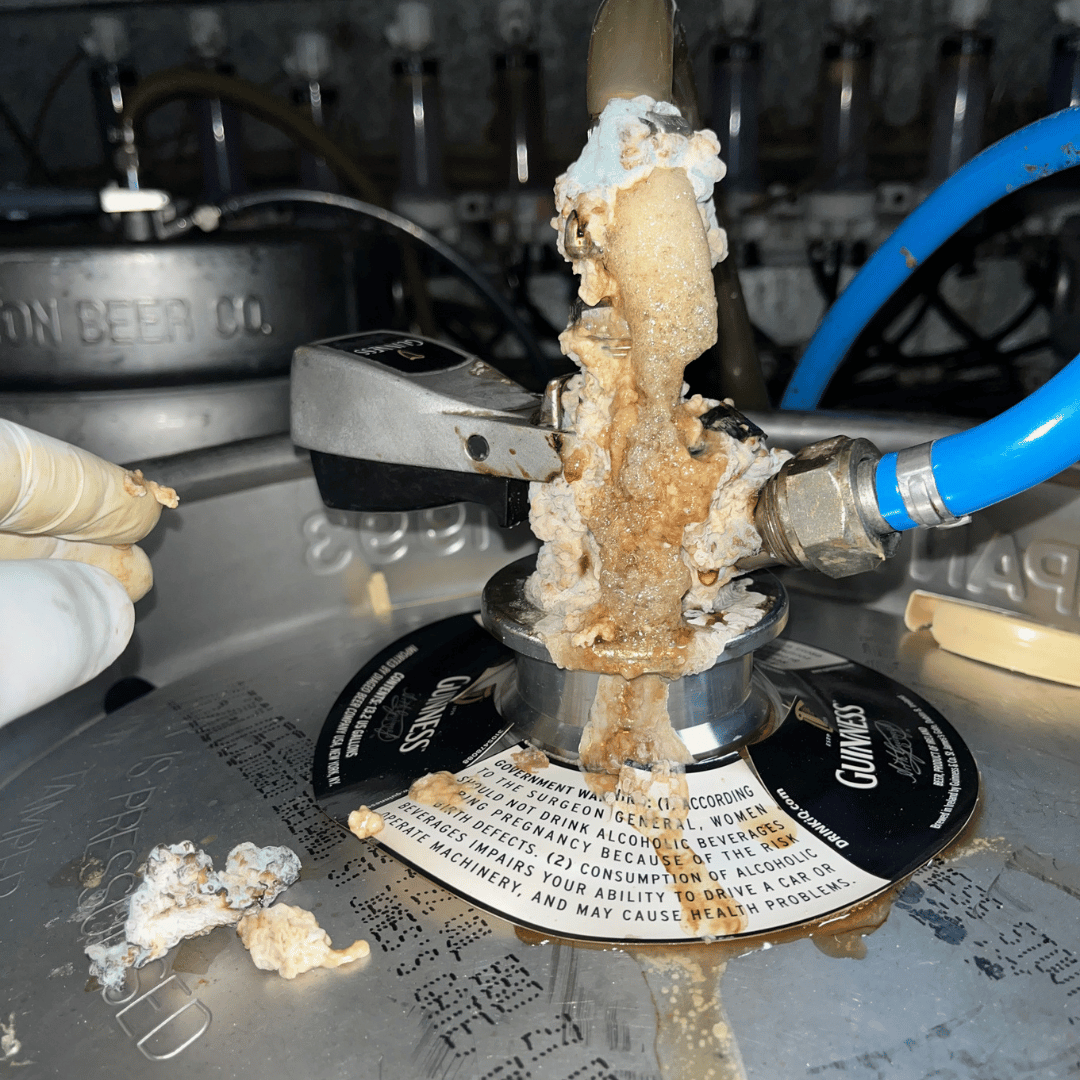
Foam on any individual tap that appears mid-keg and was not present at the start of the same keg is a line temperature signal. Address it by checking the glycol system rather than adjusting CO2 pressure. Adjusting gas to compensate for a temperature problem moves the system further from spec and makes the underlying issue harder to diagnose. A tap that suddenly starts pouring foam on a holiday is almost always a refrigeration or glycol issue, not a gas issue.
CO2 pressure should be visually confirmed on regulators at least once during service. A primary regulator that drops unexpectedly mid-service indicates either a cylinder running empty or a regulator issue that needs immediate attention. Having a backup CO2 cylinder available and connected to a manifold that can be switched quickly is standard operating practice for any high-volume service event. The Brewers Association Draft Beer Quality Manual covers gas system management and pressure troubleshooting in detail and is a useful reference for any operator building out their holiday service protocol.
After the Holiday: What to Do Before the Weekend Is Over
High-volume service accelerates wear on every component in the system. After the 4th, schedule a line cleaning before the next full service period. Lines that moved a higher-than-normal volume of beer over a compressed timeframe need to be addressed promptly, not at the next scheduled interval. The same elevated draw volume that makes the holiday profitable is also the reason the lines need attention sooner than usual.
Check glycol concentration and cooler performance once the volume pressure is off the system. Equipment that performed adequately under peak load may have revealed a marginal condition that held up during the holiday but warrants attention before the rest of the summer continues. Addressing those findings the week after the 4th is considerably easier than managing a failure during the next high-volume weekend. For a full post-holiday system check, CBG's maintenance and repair team can assess what the peak weekend exposed before the next one arrives.
If your draft system needs a pre-holiday inspection, a line cleaning, or a refrigeration check before the 4th of July, CBG Draft Services provides full draft beer system service across North and South Carolina. We work with bars, restaurants, breweries, and taprooms to make sure the biggest sales day of the summer does not become the biggest service call of the summer. Schedule now before the calendar fills up.
Schedule Your Pre-Holiday Service Visit
Or call us at (704) 727-3300 — Mon–Fri, 8am–4:30pm EST